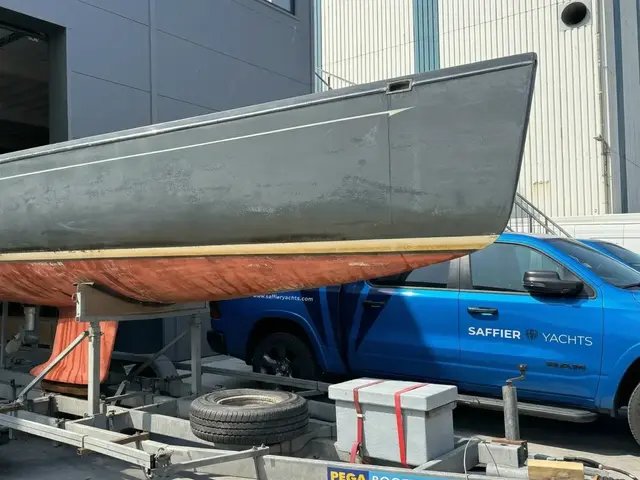
Owners usually notice it in the surface first.
Four situations where polishing a polyester boat is the right next step.
The season is starting and the hull needs attention
Many owners schedule a polish every spring as routine care. The finish stays in condition and build-up never gets the chance to settle in.
The hull stays dull after cleaning
If the gelcoat stays flat even when clean, the problem sits in the layer itself. Polishing removes the degraded top layer and brings the gloss back.
Colour has faded or the hull looks chalky
A hull that has gone noticeably greyer or leaves residue on your hand has advanced oxidation. Washing or waxing changes little; the layer has to be corrected.
Light scratches and fender marks
Surface scratches, scuffs and fender marks are polished out during the treatment. Deep scratches that reach into the gelcoat call for gelcoat repair, and we will tell you so honestly.
How we treat the hull.
The treatment follows the condition of the gelcoat. A hull with light dullness needs a different approach than a hull with years of oxidation.
Clean and assess
Salt, dirt and old product residue come off first. Only then can real oxidation be separated from surface staining.
Match the correction to each zone
Zones weather at different rates. The transom and horizontal surfaces often need more correction than the rest of the hull, so the machine stage differs per zone.
Remove the oxidation layer
The weathered top layer comes off completely. Polishing over oxidation gives a gloss that fades again within weeks.
Polish and seal
We polish the hull back to a clear, deep gloss and finish with a sealant that locks in the result.
Gloss restoration where your boat is kept.
Your boat does not have to go anywhere. We work in the marina, at the berth or ashore; there is no transport to arrange.
Regular work in marinas and at berths around Amsterdam and nearby cruising waters. Is your boat kept somewhere else? Feel free to discuss your berth.
Clear answers before you commit.
The questions owners ask us most often.
Can ProShine handle basic cleaning or polishing only?
Yes. Far from every boat needs oxidation correction. We assess on location what is going on and do what fits: cleaning, waxing or polishing. Dirt, algae, limescale and old wax are distinguished from real oxidation upfront, so a straightforward cleaning request is never treated as heavy polishing work.
What is the difference between polishing and waxing?
Polishing corrects the surface and removes oxidation, haze and light scratching. Waxing or sealing then adds protection and gloss retention. On dull gelcoat, the result almost always starts with polishing.
Why does a polyester boat go dull?
The gelcoat of a polyester boat weathers through sun, salt and time. The surface becomes porous and loses gloss, later colour too. Polishing removes the weathered top layer; a sealant then holds the result.
How often should you polish a boat?
It depends on the condition of the gelcoat, the berth and how the boat is maintained. On a well-kept hull a maintenance polish with protection is usually enough; polishing is only needed once the gelcoat turns dull or shows oxidation. During the assessment we tell you what your boat needs, so you never polish more often than necessary.
What does polishing a boat on location cost?
The price depends on size, gelcoat condition, access and how much correction is needed. That is why we assess the hull on location first. The inspection commits you to nothing; you then receive a concrete quote, usually within 24 hours. Contact ProShine for a price indication for your boat.
Can I polish my boat myself?
Light dullness can often be handled yourself with the right machine and products. With heavy oxidation, scratches or a large hull the risk is higher: gelcoat is a thin layer and polishing too much away cannot be undone. If in doubt, we assess the hull first, without obligation.
When is oxidation too advanced for a light polish?
If the gelcoat stays chalky, has lost a lot of colour, or looks dull again right after cleaning, a light finishing step is rarely enough. Heavier correction is then needed to bring the gloss back.
Can ProShine also remove scratches and fender marks?
Yes, light surface scratches and fender marks are polished out during gloss restoration. Deeper scratches or chips that go through the gelcoat call for a local gelcoat spot repair to protect the hull.
Does ProShine also polish sloeps?
Yes. We work on polyester sloeps, boats and yachts. For a sloep too, we first assess the condition of the gelcoat and advise what is needed: a maintenance polish, machine polishing or oxidation correction.
Where can I have my boat restored?
ProShine comes to your berth, the marina or the quay, so you do not have to move the boat. We regularly work in North Holland, around the Markermeer and in central Netherlands. If your boat lies elsewhere, get in touch to discuss your berth.
Want to know what your hull needs?
Send a few photos or book an assessment on location. You will quickly know whether light correction is enough or the hull needs broader oxidation restoration.
- Inspection on location, without obligation
- Concrete advice: cleaning, waxing or polishing
- Quote usually within 24 hours